
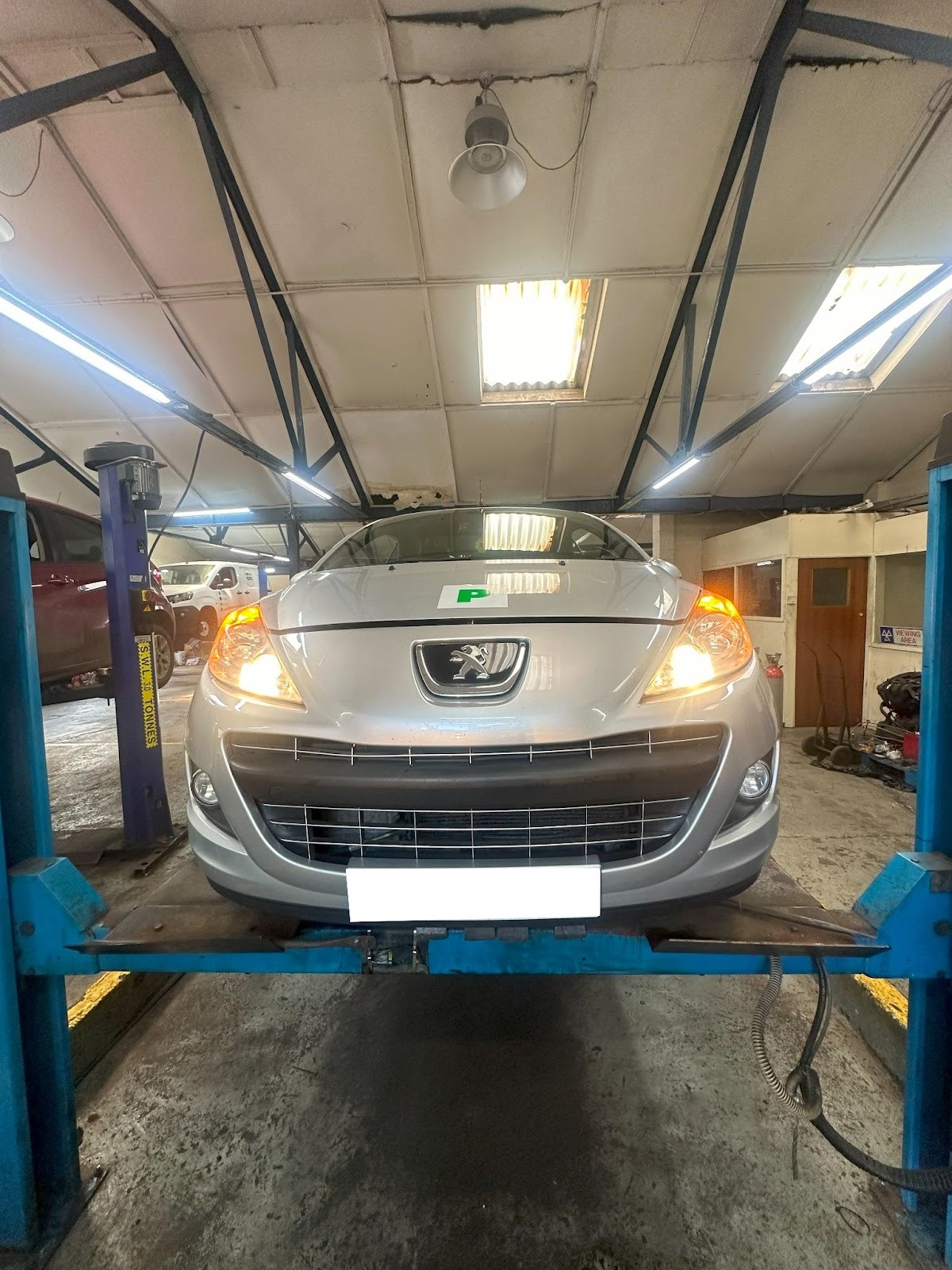
If your car fails its MOT, you usually get up to ten working days to return for a partial retest at the same centre, often for free or at a reduced cost. The retest only checks the failed items unless you’re late, go elsewhere, or the faults were serious, in which case you’ll need a full MOT again.
People talk about MOT retests like they’re some mysterious second round of judgement, but the truth is way simpler. An MOT retest is just your second shot after that initial “nope” from the inspector. And most fails aren’t dramatic. They’re tiny things you probably didn’t even notice because you’re busy living your life, a worn tyre, a foggy headlamp, a cracked number plate, or a warning light that’s been glowing since the school run.
If you’re getting ready for your mot in Maidstone, understanding how retests work helps you avoid paying twice.
But once your car fails, the rules around retests can get confusing fast. There are deadlines, fees, exceptions, different types of retests and laws around what you can or can’t drive after a fail. That’s why this guide lays out everything in plain English. By the end, you’ll understand exactly how MOT retests work, what’s free, what isn’t, when you can drive, when you can’t, and how to avoid paying twice.
Let’s break everything down properly.
1. A retest simply means rechecking the things your car failed on
When your car fails an MOT, you receive a VT30 failure certificate and the fail is instantly logged in the DVSA system. That fail isn’t hidden, temporary or “soft.” It’s official. Once that’s done, you need a retest to confirm the issues have been fixed.
A retest normally isn’t a full MOT again. It’s usually a focused check in which the tester only inspects the items that originally failed. So if your car failed on tyres, lights and wipers, that’s all they’ll recheck. But if the faults were big enough, or if you broke the DVSA rules, you might need to go through the entire MOT again from scratch.
Understanding the type of retest you’re getting matters, because it directly affects your costs.
2. The famous “10 working days” rule decides everything
This rule is the heart of all MOT retest policies. After your car fails, you have up to 10 working days to bring it back to the same MOT centre for a partial retest. Working days don’t include weekends or bank holidays, so the window often stretches to nearly two full weeks.
If you return within those 10 working days and use the same MOT station, you remain eligible for a partial retest rather than a full one. This matters because a full MOT retest means paying the full MOT price again. No shortcuts there.
But if you return on day eleven? Or two weeks later? Or after the bank holiday break?
You lose the partial retest eligibility and start again with a full MOT, full inspection, full fee. No exceptions.
This is why timing matters more than most people realise.
3. When a retest is free, when it’s reduced, and when you pay full price
This is the part drivers find most confusing, so let’s make it super clear.
If you leave your car at the MOT center after it fails, let them repair it there, and if they carry out the retest within ten working days. The retest is often free. Many garages treat it as a courtesy retest because the vehicle never left the premises and the repair was handled in-house.
If you take your car away to be repaired elsewhere and bring it back within that ten-day window, the MOT centre can legally charge a reduced retest fee. Some garages charge nothing, some charge a small amount, and some charge up to half the original MOT price. It depends on their policy.
If you take longer than 10 working days or go to a different MOT centre, the next test will be a full MOT again. No discounts, no partials.
This is why comparing MOT prices isn’t enough. You need to look at each garage’s retest policy too. A cheap MOT with no free retest can cost more in the long run than a slightly higher MOT that includes generous retest rules.
4. Partial retest vs full retest — what’s actually checked?
During a partial retest, the tester only rechecks the specific items your car originally failed on. So if your MOT failure listed tyres, emissions and headlamps, that’s all they’ll inspect again. This keeps the retest fast, simple and more affordable.
A full retest occurs when the deadline is missed, the car is taken elsewhere, or the nature of the failures suggests a deeper problem. A full retest isn’t just a quick look. It’s the entire MOT checklist again, start to finish.
This matters because certain garages prefer full retests if the original failure was extensive or if multiple safety-critical systems were affected. They want to ensure everything around the failure remains safe and compliant.
So the takeaway is simple. If you want the easiest, quickest retest, stay within ten working days and return to the same MOT centre.
5. Whether you can legally drive your car after an MOT fail
A lot of people get this part wrong, so let’s clear it up with the DVSA stance.
If your previous MOT is still in date and the failure items are not classed as “dangerous,” you’re technically allowed to drive the car to get repairs done or bring it back for a retest. But the car still has to be roadworthy, meaning the faults must not put you or others at risk.
If the failure includes a “dangerous” defect, you’re legally not allowed to drive the car at all. Not to work. Not home. Not around the block. Not even to another garage. Doing so risks serious penalties, large fines, penalty points, potentially even a driving ban, and may invalidate your insurance.
So yes, the answer is situational. But common sense helps too. Just because something is legally allowed doesn’t mean it’s safe. If your brakes are bad, your tyres are splitting, or your steering feels unstable, don’t drive the car. Arrange recovery or mobile repair instead.
6. Paperwork, timeframes and how many retests you get
When your car fails its MOT, you receive a VT30 fail certificate. This lists every defect that caused the failure, whether the car was marked as dangerous, and which items must be fixed before returning.
You get only one official partial retest per full MOT. If you fail again after that retest, the next test is treated as a full MOT, whether it’s the next day or the next month.
The failure is recorded digitally in the MOT database the moment it happens. This means you cannot “hide” the failure by going to a different garage. Every MOT centre can see the failure instantly.
If you’re thinking of appealing an MOT result, the DVSA requires that you don’t repair the car beforehand. They need to inspect it as-is. That means arranging the appeal quickly and avoiding alterations that change the vehicle’s original condition.
Timing, paperwork, and the VT30 certificate all play into how smooth your retest experience will be.
7. Why choosing the right MOT centre matters — Malling Repair Services
Here’s where picking the right garage actually influences your retest outcome. Every MOT centre follows DVSA rules, but their approach, communication and retest policy can be wildly different. Some places charge aggressively for retests. Some create pressure to get repairs done immediately. And some test centres don’t communicate clearly about what your car actually needs.
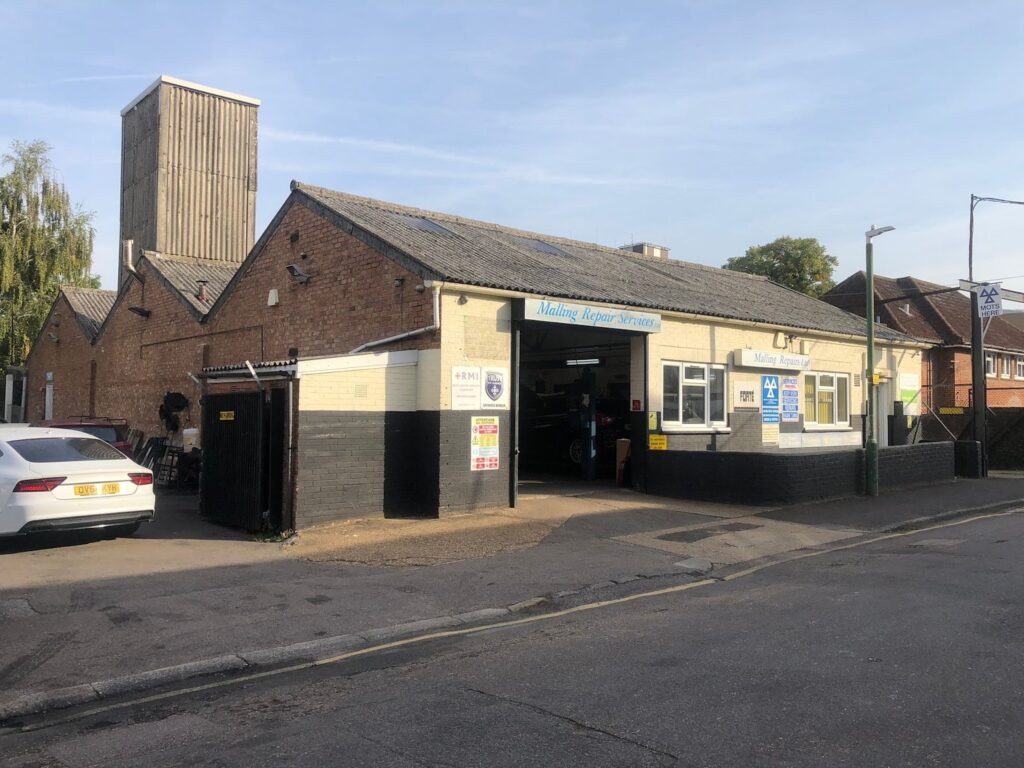
Malling Repair Services stands out because they make the whole process feel less stressful and more practical. Drivers go there because the staff actually explain what failed, why it failed, and how serious the issue really is. They don’t create panic or overwhelm you with mechanical jargon. Their retest approach is straightforward, their timelines are clear, and their pricing is honest. If your car needs repairs and you want them handled under one roof, they’re equipped for that too. And if your car needs a partial retest, they aim to make it smooth and quick rather than dragging out a simple recheck.
You can also check Malling Repair Services on Google to see reviews, directions, and updated opening hours before booking your retest.
The difference between an MOT centre that helps you and one that drains you becomes painfully obvious the moment you fail an MOT. Malling Repair Services is the kind of garage that makes the retest feel like a normal step, not a punishment. Visit Malling Repair Services now for MOT and retest. Here are the directions to reach their location.
Final Thoughts
An MOT retest isn’t something to stress over. It’s just a structured second chance. But understanding the rules helps you avoid paying twice or showing up too late. Remember the ten-working-day window. Know when you’re due for a free or discounted retest. Understand when you can legally drive and when you absolutely shouldn’t. And always pick a garage with a clear retest policy so you’re not caught off guard by unexpected fees.